New ‘Spyro’ Game, Complete With Franchise’s First Dragon-Flight Feature, Set for Spring 2027
June 8, 2026
That’s a Wrap on the Apple WWDC 2026 Keynote, But the Event Isn’t Over Yet
June 9, 2026
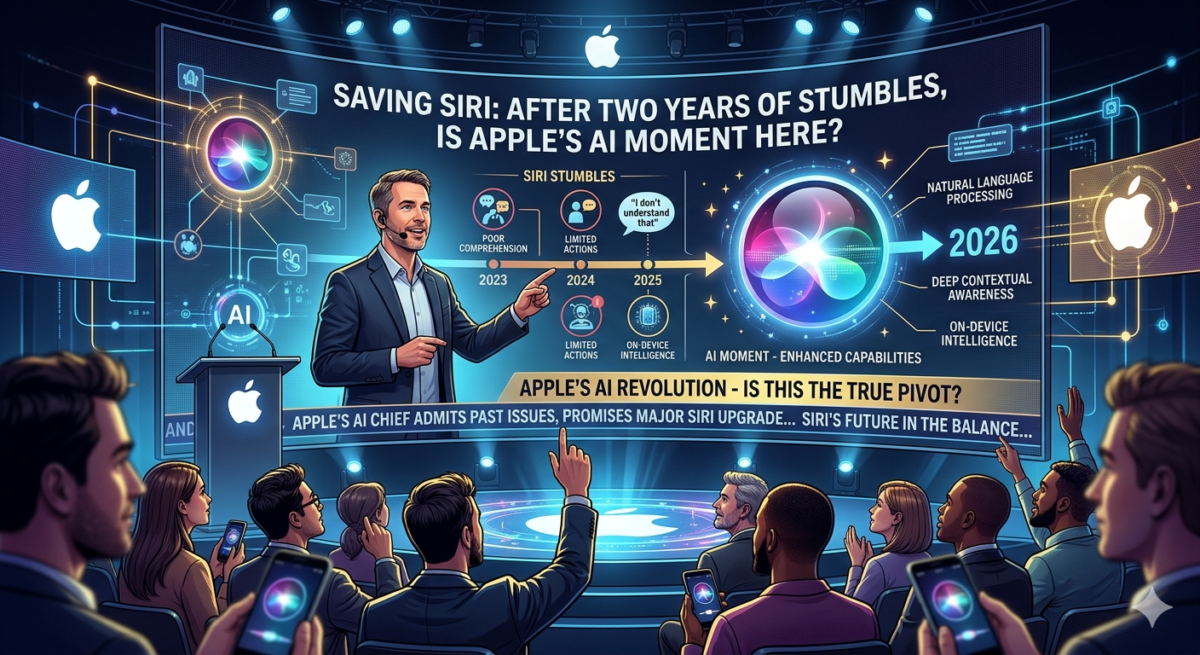
aving Siri: After Two Years of Stumbles, Is Apple’s AI Moment Here?
Apple is once again under pressure to prove it can compete in the rapidly evolving artificial intelligence race. After two years of delays, missed expectations, and increasing competition from AI leaders, the company is now attempting to reposition Siri as a central part of its next-generation technology strategy.
The question facing investors, developers, and consumers is simple: after years of setbacks, is Apple’s AI moment finally here?
With growing competition from major technology companies and rising consumer demand for intelligent digital assistants, Apple is betting that a new generation of AI-powered features can help Siri regain relevance and strengthen the company’s position in the AI era.
Apple’s AI Journey Has Faced Major Challenges
Over the past two years, Apple has faced criticism for moving more slowly in artificial intelligence compared to many of its competitors.
While rival companies introduced advanced AI chatbots, generative AI platforms, and increasingly sophisticated digital assistants, Apple maintained a more cautious approach focused on privacy, security, and on-device processing.
This strategy helped protect user data but also created concerns that the company was falling behind in one of the technology industry’s most important battles.
Many users felt Siri lacked the intelligence, flexibility, and conversational capabilities offered by newer AI-powered assistants.
Why Siri Has Struggled in Recent Years
Although Siri was one of the first mainstream voice assistants, its development has faced several obstacles.
Limited Conversational Abilities
Users often complained that Siri struggled with complex requests and multi-step conversations.
Competition From Advanced AI Systems
The rise of large language models dramatically changed consumer expectations regarding what AI assistants should be able to accomplish.
Slow Feature Rollouts
Apple’s cautious development process sometimes resulted in delayed releases compared to competitors.
Growing Consumer Expectations
Modern users increasingly expect assistants to understand context, provide detailed answers, and perform sophisticated tasks across multiple applications.
These challenges created pressure for Apple to rethink its AI strategy.
Apple’s New AI Vision
The company is now working to transform Siri into a more intelligent and capable digital assistant.
Rather than functioning primarily as a voice-command system, future versions of Siri are expected to understand context more effectively, manage complex tasks, and provide more personalized experiences.
Apple’s broader AI strategy focuses on integrating artificial intelligence throughout its ecosystem rather than offering a standalone chatbot experience.
This approach aims to make AI a seamless part of everyday interactions across iPhone, iPad, Mac, Apple Watch, and other products.
How AI Could Change Siri
The next generation of Siri is expected to benefit from significant improvements in artificial intelligence.
Better Context Awareness
Future versions may better understand previous interactions and maintain more natural conversations.
Smarter App Integration
Siri could gain the ability to perform complex actions across multiple applications without requiring users to switch between apps manually.
Enhanced Personalization
Artificial intelligence may help Siri provide recommendations and assistance tailored to individual user preferences.
Improved Language Understanding
Advanced AI models could allow Siri to interpret requests more accurately and respond in a more conversational manner.
These improvements would represent one of the largest upgrades in Siri’s history.
Why Apple Is Taking a Different AI Approach
Unlike some competitors that rely heavily on cloud-based AI processing, Apple continues emphasizing privacy-focused artificial intelligence.
The company believes many AI tasks should occur directly on user devices whenever possible.
This strategy offers several potential advantages:
- Greater user privacy
- Faster response times
- Reduced dependence on internet connectivity
- Enhanced security protections
- Better control over personal information
Apple executives have repeatedly argued that privacy and AI can coexist without sacrificing user experience.
The Importance of AI for Apple’s Future
Artificial intelligence is increasingly becoming a major battleground in the technology sector.
Investors view AI as one of the most important drivers of future growth, productivity, and innovation.
For Apple, success in AI could strengthen:
iPhone Sales
Advanced AI features may encourage device upgrades.
Ecosystem Engagement
Smarter software experiences can increase customer loyalty.
Developer Opportunities
AI tools may create new possibilities for application development.
Competitive Positioning
A stronger Siri could help Apple compete more effectively with other technology giants.
Because of these factors, the company’s AI strategy is receiving significant attention from both investors and consumers.
Can Siri Catch Up to Competitors?
This remains one of the biggest questions facing Apple.
The company benefits from several advantages, including a massive installed user base, strong hardware integration, and a reputation for delivering polished consumer experiences.
However, competitors have already invested heavily in artificial intelligence and continue introducing new capabilities at a rapid pace.
Apple’s challenge is not simply improving Siri but demonstrating that its approach can deliver meaningful benefits for users.
Success will depend on whether the company can transform AI from a technology demonstration into practical everyday functionality.
What Consumers Want From Siri
Modern users increasingly expect digital assistants to do more than answer simple questions.
Many consumers want Siri to:
- Manage complex tasks
- Understand conversational requests
- Coordinate activities across devices
- Automate repetitive actions
- Provide intelligent recommendations
- Deliver more natural interactions
Meeting these expectations could significantly improve user satisfaction and strengthen Apple’s AI reputation.
The Road Ahead for Apple AI
The coming months are expected to be critical for Apple’s artificial intelligence strategy.
Developers, analysts, and consumers will closely evaluate new AI features and Siri improvements as they become available.
If Apple successfully delivers a more capable and intelligent assistant, the company could reposition itself as a major AI competitor despite its slower start.
However, continued delays or underwhelming features may increase concerns that rivals have established a lasting lead.
Conclusion
After two years of challenges and growing competition, Apple appears ready to begin a new chapter in its artificial intelligence journey.
By focusing on smarter Siri capabilities, deeper ecosystem integration, and privacy-focused AI experiences, the company hopes to demonstrate that it can still play a leading role in the future of artificial intelligence.
Whether this becomes Apple’s defining AI moment remains uncertain, but one thing is clear: the future of Siri will play a major role in shaping how consumers view Apple’s place in the AI era.
FAQs
Why has Siri struggled compared to other AI assistants?
Siri has faced criticism for limited conversational abilities, slower feature development, and increasing competition from advanced AI systems.
What is Apple’s new AI strategy?
Apple is focusing on integrating artificial intelligence across its ecosystem while maintaining strong privacy protections and on-device processing.
How could Siri improve in the future?
Future versions may offer better context awareness, smarter app integration, improved personalization, and more natural conversations.
Why is AI important for Apple?
AI can help drive device upgrades, improve customer experiences, strengthen ecosystem engagement, and support long-term growth.
Is Apple behind in artificial intelligence?
Some analysts believe Apple entered the generative AI race later than competitors, although the company continues investing heavily in AI technologies.
Will Apple focus on privacy in AI?
Yes. Privacy remains a core part of Apple’s AI strategy, with an emphasis on protecting user information and processing data securely.