Saros on PS5 Pro Review: Stunning 4K Visuals & Pro Performance Guide
April 24, 2026
Creative Solutions for Creatives: Top Creator Economy Trends
April 27, 2026
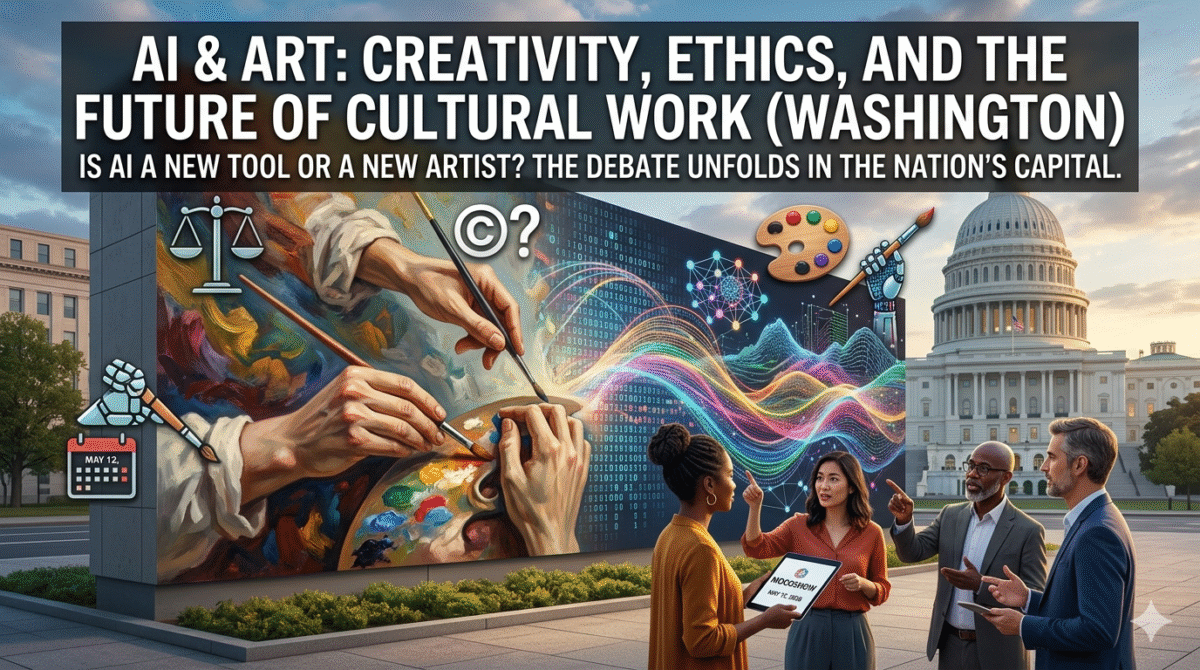
AI & Art: Creativity, Ethics, and the Future of Cultural Work (Washington)
The intersection of artificial intelligence and artistic expression has moved from the fringes of experimental science to the center of global cultural discourse. In Washington, D.C., and its surrounding metropolitan areas, a new series of discussions and events—titled “AI & Art: Creativity, Ethics, and the Future of Cultural Work”—has begun to tackle the profound questions raised by this technological shift. As AI tools like Midjourney, DALL-E 3, and Sora become more accessible, the definition of “the artist” is being rewritten in real-time.
This comprehensive exploration looks at how the nation’s capital is becoming a hub for the debate over AI’s role in our cultural heritage, the ethical dilemmas of machine-generated content, and what the future holds for those who make a living through creative labor.
1. The Creative Renaissance or the End of Authorship?
At the heart of the “AI & Art” event in Washington is a fundamental tension: Is AI a new brush, or is it a replacement for the painter?
Proponents argue that generative AI is a democratizing force. For individuals who may have vision but lack the technical motor skills to paint or animate, AI acts as an interface between imagination and reality. In the cultural landscape of Washington, where policy meets art, this is seen as a “Creative Renaissance.” It allows for rapid prototyping, new forms of digital surrealism, and the ability to process vast amounts of historical data into new visual narratives.
However, the “Future of Cultural Work” component of this discussion highlights a darker concern. If an algorithm can generate a high-quality illustration in seconds, what happens to the entry-level graphic designer, the concept artist, or the storyboarder? The Washington talks emphasize that while the output of art is expanding, the process of human creative growth is under threat.
2. The Ethics of Training Data and Intellectual Property
Washington is uniquely positioned to address the legal and ethical quagmires of AI. Because the city is home to the U.S. Copyright Office and the Library of Congress, the ethical discussions at the “AI & Art” gathering carry significant weight.
The Problem of “Scraping”
The most contentious ethical issue is how AI models are trained. Most Large Language Models (LLMs) and diffusion models were trained by “scraping” millions of images from the internet without the explicit consent of the original artists. In many cultural circles, this is viewed as a massive, systematic infringement on intellectual property.
The Quest for Ethical AI
The Washington events highlight a growing movement toward “Ethical AI.” This includes:
- Opt-in Datasets: Models trained only on public domain works or images where artists have been fairly compensated.
- Attribution Tech: Watermarking and blockchain-based solutions that trace an AI-generated image back to the “influence” of its training data.
- Policy Intervention: Discussions on whether machine-generated work should even be eligible for copyright protection—a topic the U.S. Copyright Office has been debating fiercely throughout 2024 and 2025.
3. Cultural Work in the Age of Automation
The “Future of Cultural Work” is no longer a distant theoretical concept; it is a lived reality for thousands of workers in the D.C. area. From museum curators at the Smithsonian to freelance illustrators in Bethesda, the workflow is changing.
The Role of the Curator
In the past, cultural work involved the preservation and interpretation of human-made artifacts. Now, curators are tasked with archiving “digital-native” AI art. This raises questions about authenticity. How does a museum value an artwork that can be replicated perfectly by anyone with the same “prompt”? The consensus emerging from the Washington panels is that the value will shift from the final image to the concept and intent behind the prompt.
The Skill Shift: “Prompt Engineering”
Cultural workers are being forced to adapt. The term “Prompt Engineering” is becoming a staple in the resumes of digital creators. The event emphasizes that the most successful cultural workers of the future will be those who can “collaborate” with AI, using it as a sophisticated assistant rather than a threat.
4. The Impact on Washington’s Local Art Scene
While much of the AI debate happens on a global scale, its local impact in the Washington/Maryland area is distinct. Local galleries and cultural institutions are grappling with how to integrate AI without alienating the traditional fine arts community.
Washington has a rich history of “Social Realism” and political art. AI offers a new way to visualize political data, demographic shifts, and historical revisions. At the “AI & Art” event, several local creators demonstrated how they use AI to reconstruct historical neighborhoods of D.C. that were destroyed during urban renewal, providing a visual “voice” to marginalized history.
Frequently Asked Questions (FAQs)
1. Can AI-generated art be copyrighted?
Currently, the U.S. Copyright Office has ruled that art created entirely by AI without significant human intervention cannot be copyrighted. However, work that combines AI tools with substantial human creative input is still a “gray area” being debated in Washington’s legal circles.
2. Is AI art “stealing” from real artists?
This is a central ethical debate. While AI doesn’t “copy-paste” images, it learns patterns from existing art. Many artists argue that using their work to train a commercial tool without permission is a form of intellectual theft, while tech companies argue it falls under “Fair Use.”
3. How can traditional artists compete with AI?
The “AI & Art” event suggests that traditional artists should lean into the “human” elements that AI cannot replicate: physical texture, personal biography, community engagement, and the “mistakes” that give art its soul.
4. What is the “Future of Cultural Work” for students?
For students in the D.C. metro area, the future involves a “hybrid” education. Art students are now being encouraged to learn coding and AI ethics alongside traditional painting and sculpture to remain competitive in a shifting job market.
5. Will AI replace museum curators?
Unlikely. While AI can organize data, it lacks the human context, historical sensitivity, and emotional intelligence required to curate a cultural narrative. AI will likely become a tool for curators to manage vast digital archives.
🚀 Transform Your Brand with TechInDesigns
Your brand deserves a visual identity that speaks volumes. At TechInDesigns, we craft stunning custom logo designs, branding assets, and creative visuals that help your business stand out and connect with your audience at first glance. Our expert designers tailor every concept to reflect your vision and boost your brand’s impact online and offline.
📩 Ready to Elevate Your Brand Identity?
Connect with TechInDesigns today and bring your ideas to life with powerful logo design, strategic branding, and eye-catching graphics that drive recognition and growth