
Star Wars Eclipse Development Is Very Slow – Fans React to Delays
April 7, 2026
The Real Impact of AI Art on the Creative Industry: Opportunities and Challenges
April 8, 2026
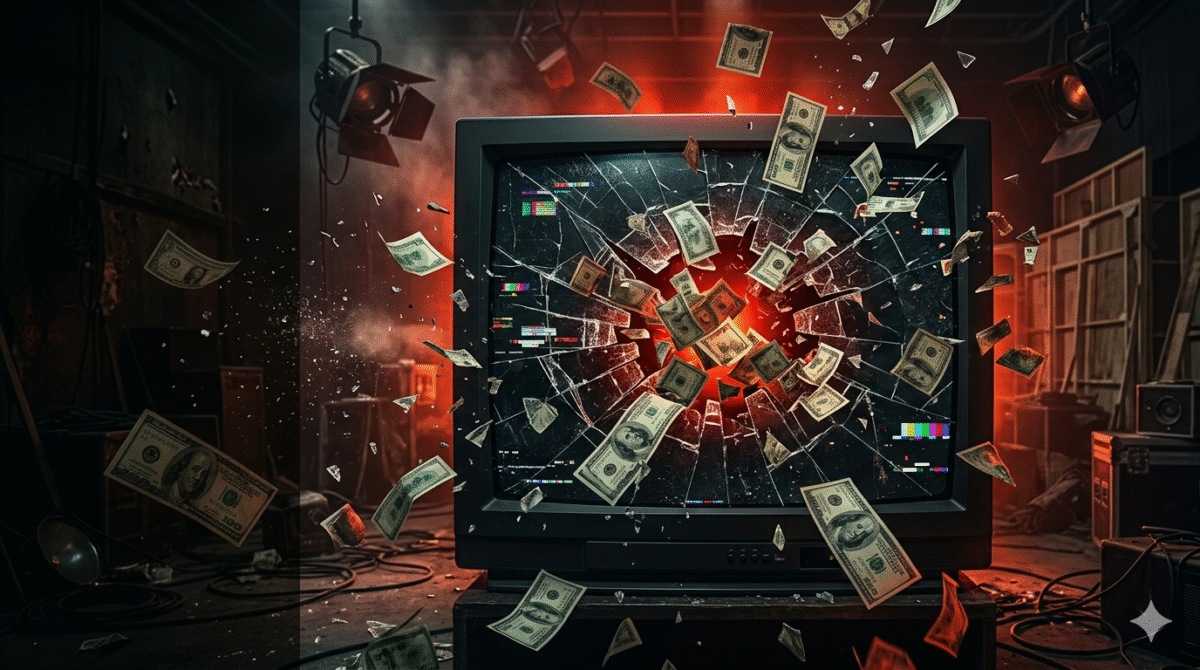
Money Has Always Ruled the TV Industry. Greed Is Pushing It to Collapse
The television industry has always been driven by one central force: money. From the earliest days of broadcast networks to today’s sprawling streaming empires, financial incentives have shaped what gets made, who gets hired, and how stories are told. But in recent years, something has shifted. The balance between profit and purpose has tilted dangerously, and greed is now threatening to destabilize the entire system.
This isn’t just another “money greed or need essay” debate—it’s a real-time transformation of an industry that once defined global entertainment.
The Foundation: Money as the Driving Force
To understand the current crisis, we must first accept a simple truth: money has always been treated as a commodity in Hollywood. Studios invest capital into content with the expectation of returns, just like any other business.
From traditional TV networks to modern platforms like Netflix and Disney, financial success has always been the ultimate metric. Ratings, subscriptions, ad revenue—these numbers determine what survives and what gets canceled.
In this system, creativity has often been secondary to profitability. Yet, for decades, there was still a balance. Quality storytelling and financial success could coexist.
That balance is now breaking.
When Profit Turns Into Greed
There’s a clear difference between earning money and chasing it at any cost. The TV industry has crossed that line.
“Money brings greed” is no longer just a philosophical statement—it’s an observable reality. Studios and executives are increasingly focused on:
- Cutting production costs
- Reducing creative risks
- Maximizing short-term profits
This shift has led to decisions that undermine the very foundation of the industry.
Writers’ rooms are shrinking. Long-term contracts are disappearing. Shows are canceled abruptly—even when they have dedicated audiences. The focus is no longer on building lasting cultural impact, but on quick financial wins.
Streaming: The Double-Edged Sword
Streaming platforms revolutionized television, offering unprecedented access and creative freedom. But they also accelerated the industry’s problems.
Companies like Warner Bros. Discovery and Amazon entered the race with massive investments, creating a content boom.
However, this boom came with consequences:
- Overspending on content without sustainable revenue models
- Intense competition leading to consolidation and layoffs
- Pressure to continuously grow subscriber numbers
Now, as growth slows, these same companies are pulling back—cutting costs, canceling projects, and restructuring operations.
The result? A creative ecosystem in crisis.
The Human Cost of Greed
Behind every show are thousands of workers—writers, actors, editors, designers—whose livelihoods depend on a stable industry.
But today, many are struggling.
The idea that “money is yours but resources belong to society” feels especially relevant here. While corporations generate billions, the people creating the content often face:
- Job insecurity
- Reduced pay
- Fewer opportunities
This imbalance has led to strikes, protests, and growing dissatisfaction across the industry.
The system is no longer working for the people who sustain it.
Content Saturation and Declining Quality
Another consequence of greed is content overload.
In the race to dominate the market, studios have flooded platforms with shows and movies. But quantity has come at the expense of quality.
Viewers are now experiencing:
- Repetitive storytelling
- Lack of originality
- Short-lived series with no satisfying conclusions
This raises an important question: if audiences lose interest, what happens to the business model?
Even the most aggressive profit strategies cannot succeed without engaged viewers.
Why the System Is Unsustainable
The current trajectory of the TV industry is not sustainable for several reasons:
1. Financial Overreach
Streaming platforms spent billions chasing growth that may never return. Now, they are forced to cut back drastically.
2. Erosion of Talent
When creative professionals feel undervalued, they leave—or stop producing their best work.
3. Audience Fatigue
Too much content, combined with declining quality, leads to disengagement.
4. Short-Term Thinking
Focusing only on immediate profits prevents long-term stability.
In essence, greed is undermining the very mechanisms that generate profit.
Lessons from the Past
History has shown that industries driven purely by greed eventually face consequences. The phrase “greed is a big vice” may sound simplistic, but it captures a deeper truth.
Sustainable success requires balance:
- Profit and creativity
- Business goals and human value
- Growth and stability
Hollywood once understood this balance. Today, it risks forgetting it.
A Path Forward
The TV industry is not beyond saving—but it needs a reset.
Reinvest in Creativity
Studios must prioritize storytelling again. Great content drives long-term success.
Support Talent
Fair wages, stable contracts, and creative freedom are essential for a healthy ecosystem.
Adopt Sustainable Models
Instead of chasing endless growth, companies should focus on profitability and stability.
Rebuild Audience Trust
Quality over quantity will bring viewers back.
The Bigger Picture
At its core, this issue is not just about television—it’s about how industries operate in a profit-driven world.
Money is necessary. It fuels innovation, supports jobs, and drives progress. But when money becomes the only goal, everything else suffers.
The TV industry is now facing the consequences of that imbalance.
Conclusion
Money has always ruled the TV industry, but greed is pushing it toward collapse. The shift from sustainable growth to aggressive profit-chasing has created a fragile system—one that risks breaking under its own weight.
The question is no longer whether change is needed. It’s whether the industry will act in time.
Because in the end, even in Hollywood, success depends on more than just money—it depends on people, creativity, and trust.
FAQs
Q1: Why is the TV industry facing challenges today?
The industry is struggling due to overspending, intense competition, and a shift toward profit-driven decisions that neglect creativity.
Q2: How has streaming affected the TV industry?
Streaming expanded content creation but also led to financial instability, layoffs, and increased pressure for growth.
Q3: What does “money brings greed” mean in this context?
It refers to companies prioritizing profits over quality, fairness, and long-term sustainability.
Q4: Is the TV industry collapsing?
It’s not collapsing yet, but it is undergoing a major transformation that could reshape its future.
🚀 Transform Your Brand with TechInDesigns
Your brand deserves a visual identity that speaks volumes. At TechInDesigns, we craft stunning custom logo designs, branding assets, and creative visuals that help your business stand out and connect with your audience at first glance. Our expert designers tailor every concept to reflect your vision and boost your brand’s impact online and offline.
📩 Ready to Elevate Your Brand Identity?
Connect with TechInDesigns today and bring your ideas to life with powerful logo design, strategic branding, and eye-catching graphics that drive recognition and growth