Oil Prices Sink on Signs of Possible U.S.-Iran Deal
May 25, 2026
Arm, IBM and Hewlett Packard Soar as Nvidia AI Rally Grows
June 1, 2026
Introduction
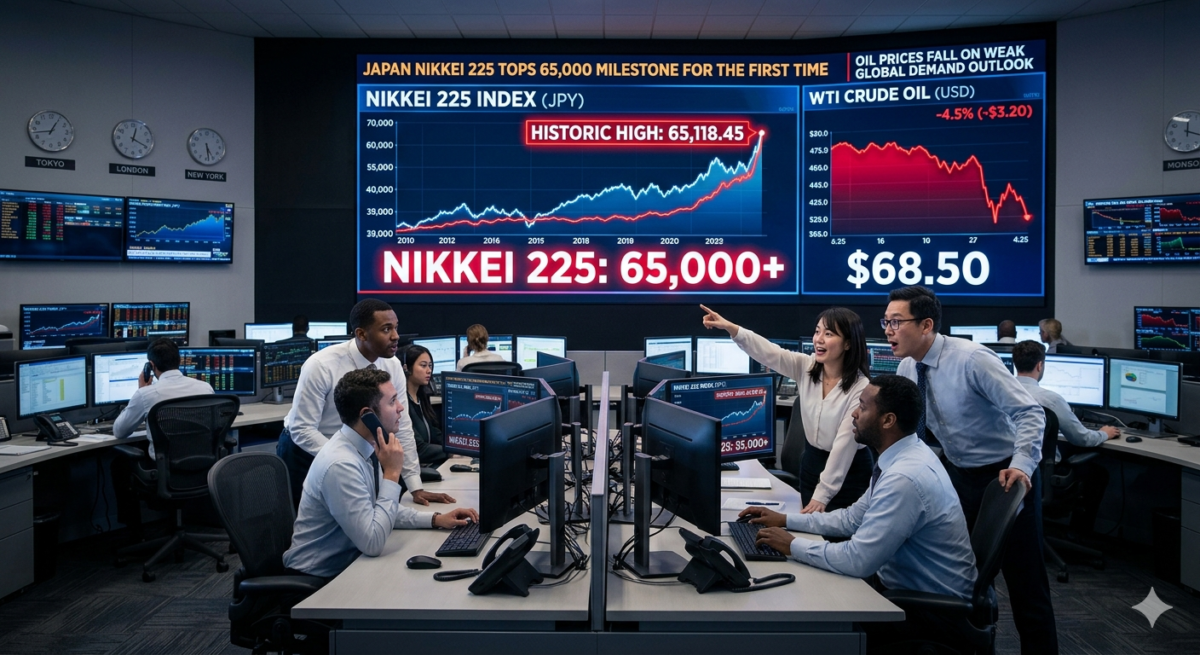
Japan’s benchmark Nikkei 225 index reached a historic milestone by crossing the 65,000 level for the first time, reflecting renewed investor confidence across Asian markets. The rally came as global oil prices declined sharply following optimism surrounding the possible reopening and stabilization of shipping routes near the Strait of Hormuz.
The surge in Japanese equities highlights improving market sentiment as investors react positively to easing geopolitical tensions and stronger corporate performance expectations.
Nikkei 225 Reaches Record High
The Nikkei 225 continued its strong upward momentum, breaking through the important 65,000-point mark during trading. The index has experienced significant growth over the past year, supported by strong earnings from Japanese companies, increased foreign investment, and improved global market conditions.
Technology, manufacturing, and export-related stocks played a major role in pushing the market higher. Investors remain optimistic about Japan’s economic recovery and the country’s growing importance in global supply chains.
The record-breaking performance also reflects broader confidence returning to Asian financial markets after periods of volatility earlier in the year.
Falling Oil Prices Boost Market Confidence
One of the major drivers behind the rally was the decline in oil prices after reports suggested improving stability around the Strait of Hormuz. The possibility of reduced disruptions to global energy transportation helped calm investor concerns about inflation and rising operating costs.
Lower oil prices are generally viewed positively for economies like Japan that rely heavily on imported energy. Reduced fuel costs can lower expenses for manufacturers, airlines, logistics companies, and industrial businesses.
As energy prices eased, investors shifted back toward equities, particularly in sectors that benefit from lower transportation and production costs.
Foreign Investment Continues Supporting Japan
International investors have increasingly turned toward Japanese markets in recent years due to corporate reforms, stable governance, and improving shareholder returns.
Many analysts believe Japan is benefiting from:
- Strong export performance
- Stable monetary conditions
- Corporate restructuring efforts
- Growing global investor interest
The Nikkei’s rise above 65,000 reflects how foreign capital continues flowing into Japanese equities as investors seek alternatives to more volatile global markets.
Technology and Export Stocks Lead Gains
Japanese technology companies and export-focused manufacturers were among the biggest contributors to the market rally. A weaker yen has also supported exporters by making Japanese products more competitive internationally.
Automotive, semiconductor, robotics, and electronics sectors continue attracting investor attention as global demand for advanced technology and industrial production remains strong.
The performance of these industries has helped strengthen confidence in Japan’s broader economic outlook.
Market Volatility Still Remains a Risk
Despite the historic gains, analysts caution that financial markets remain sensitive to geopolitical developments, oil prices, and central bank decisions worldwide.
Any renewed tensions in the Middle East or unexpected economic slowdown could quickly impact investor sentiment again. Rising interest rates globally and inflation concerns also continue influencing market behavior.
Investors are therefore closely monitoring developments in energy markets and global economic data.
Japan’s Market Recovery Gains Momentum
The Nikkei 225’s record performance marks another major milestone in Japan’s long-term market recovery. After decades of slower growth and market stagnation, Japanese equities have regained strong momentum, attracting both domestic and international investors.
Many analysts now believe Japan is entering a stronger phase of market competitiveness driven by innovation, industrial strength, and improving corporate profitability.
Conclusion
Japan’s Nikkei 225 crossing 65,000 for the first time reflects growing investor optimism fueled by falling oil prices, easing geopolitical concerns, and continued strength in Japanese corporate performance. The historic rally highlights Japan’s renewed position as one of Asia’s strongest financial markets.
While risks remain tied to global economic uncertainty and geopolitical developments, the Nikkei’s performance signals strong confidence in Japan’s economic and market outlook moving forward.
FAQs
1. Why did the Nikkei 225 reach a record high?
Investor optimism, lower oil prices, and strong corporate performance helped push the index above 65,000.
2. How do falling oil prices help Japan?
Japan imports much of its energy, so lower oil prices reduce business and transportation costs.
3. What sectors led the Nikkei rally?
Technology, manufacturing, export, and industrial companies were major contributors.
4. Why are investors interested in Japanese stocks?
Corporate reforms, stable governance, and strong exports are attracting foreign investment.
5. Can the Nikkei continue rising?
Future performance will depend on global economic conditions, oil markets, and investor confidence.
🚀 Transform Your Brand with TechInDesigns
Your brand deserves a visual identity that speaks volumes. At TechInDesigns, we craft stunning custom logo designs, branding assets, and creative visuals that help your business stand out and connect with your audience at first glance. Our expert designers tailor every concept to reflect your vision and boost your brand’s impact online and offline.
📩 Ready to Elevate Your Brand Identity?
Connect with TechInDesigns today and bring your ideas to life with powerful logo design, strategic branding, and eye-catching graphics that drive recognition and growth