
Instagram Head Warns: You Can’t Trust What You See Online
January 1, 2026
Most Exciting Films to Watch in 2026
January 2, 2026
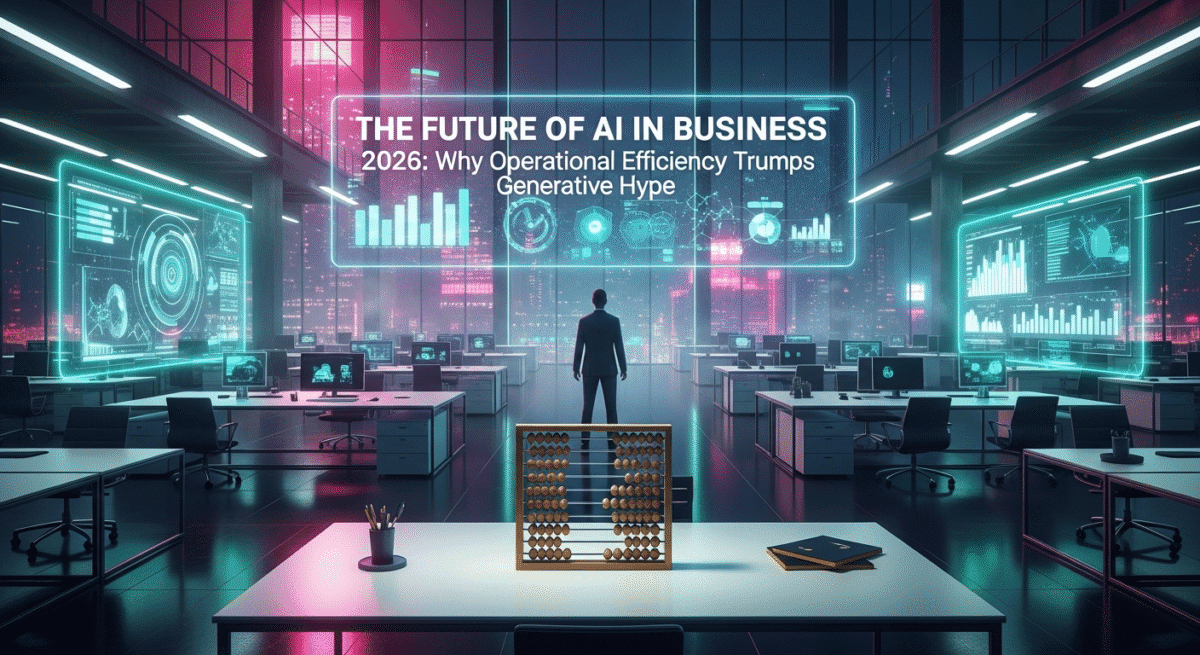
In 2026, AI Will Move from Hype to Pragmatism
As artificial intelligence evolves, 2026 is shaping up to be the year when AI transitions from buzzword and hype toward practical, real‑world applications. After years dominated by flashy demos, ever‑bigger models, and speculative promises, industry experts now predict a shift toward pragmatic deployments that deliver tangible value for businesses, workers, and everyday users.
In essence, the party is not over for AI — but the industry is getting sober about how and where AI should be implemented. This evolution reflects broader trends emphasizing usability, cost‑effectiveness, integration into systems people already use, and architectures tailored to specific tasks rather than sheer model size.
Why 2026 Is a Turning Point for AI
From 2023 to 2025, artificial intelligence captured headlines with record-breaking model sizes, generative art, and large language model breakthroughs that demonstrated astonishing capabilities. Yet while these advances were impressive, many applications remained experimental or theoretical — great for attention, less effective for daily workflows.
Now, in 2026, the focus is shifting toward pragmatic AI — systems that solve real problems, integrate cleanly into existing workflows, and provide measurable impact. Experts say this is a natural maturation phase in the technology life cycle, where hype gives way to meaningful utility.
Smaller, Smarter Models Gain Ground
One hallmark of this pragmatic shift is the rising role of smaller, specialized AI models. These models are more efficient, less costly to deploy, and tailored for domain-specific tasks, making them ideal for business use cases.
Where once the emphasis was on training ever-larger systems with more data and computing power, many developers now argue that smaller streamlined models can perform just as well — or better — when fine-tuned for a specific context. These efficient models are faster, cheaper, and easier to integrate into existing systems, from customer service automations to data analysis tools.
This trend reflects growing recognition that size alone does not dictate value. Instead, precision, adaptability, and domain relevance are becoming primary success metrics for AI adoption.
From Demos to Deployment
In early AI development, demos often dazzled but didn’t always translate into practical utility. Today, industry leaders are prioritizing deployments that solve real business problems over experimental displays of capability.
Pragmatic AI applications emerging in 2026 include:
- AI tools that augment human workflows rather than replace them
- Systems embedded in everyday software used by enterprises
- Applications that reduce task friction and increase productivity
- AI-enabled automation in areas like customer support, data entry, and logistics
This shift represents a move from AI as spectacle to AI as solution, where measurable outcomes — such as time saved, errors reduced, or revenue increased — matter more than headlines.
Integration into Human Workflows
A key aspect of pragmatic AI in 2026 is how seamlessly the technology fits into existing human processes. Rather than requiring users to adapt to AI systems, AI is increasingly being designed to adapt to users’ needs.
For example, AI assistants may soon assist behind the scenes, handling repetitive tasks while users focus on decision-making and higher-order thinking. This kind of augmentation reduces cognitive load without creating dependency or replacing human agency.
The trend underscores a broader understanding that AI should serve as a tool for human enhancement, not an autonomous replacement.
Enterprise Adoption: ROI Over Hype
Businesses are now scrutinizing AI investments more rigorously, focusing on return on investment (ROI) and real impact rather than potential. Enterprises are asking:
- How does this AI improve efficiency?
- What measurable outcomes can it deliver?
- Will it reduce costs or accelerate innovation?
This pragmatic lens on AI adoption means companies that cannot demonstrate tangible benefits will struggle to justify ongoing spend. Smart enterprises are increasingly tying AI tools to specific business metrics, such as cycle time reduction, customer satisfaction gains, or operational savings.

Architectural Shifts Beyond Scaling
During the hype peak, many in the field believed that simply scaling models would unlock future breakthroughs. However, experts now acknowledge that scaling alone has limitations, and that new architectures, innovative training methods, and domain-specific designs will drive the next wave of gains.
This approach encourages diversity in AI solutions — not just big, general models, but also rich ecosystems of specialized engines optimized for particular tasks like legal reasoning, medical diagnostics, or financial forecasting.
This change places efficiency, precision, and relevance at the heart of AI development.
Edge and Embedded AI on the Rise
AI is also moving out of the cloud and into the physical world through edge computing and embedded systems. Devices like smart wearables, robotics, and home automation tools are starting to integrate AI that processes data locally, reducing latency, improving privacy, and making AI useful in offline scenarios.
By embedding intelligence into hardware and localized systems, AI becomes part of everyday life rather than something people only interact with through screens.
Challenges to Pragmatic AI Adoption
Despite progress, several challenges remain:
- Trust and governance: Demonstrating reliability and minimizing biased outputs
- Integration costs: Upfront resources needed to weave AI into existing systems
- Skill gaps: Workforce training to work alongside AI productively
- Ethical concerns: Balancing automation with accountability
Addressing these challenges requires collaboration between technologists, policymakers, and business leaders, ensuring that AI delivers value without undue risk.
FAQs – AI in 2026
Q1: Why is AI shifting from hype to pragmatism in 2026?
The focus is moving toward practical applications and real business value rather than large models and demos, as organizations demand measurable outcomes from AI.
Q2: What does pragmatic AI mean?
Pragmatic AI refers to systems designed for real-world utility, integrated into workflows, and optimized for specific tasks rather than generic hype.
Q3: Will large AI models still be relevant?
Large models remain useful, but smaller, domain-specific models are gaining traction because they are more efficient, less costly, and tailored for practical use.
🚀 Transform Your Brand with TechInDesigns
Your brand deserves a visual identity that speaks volumes. At TechInDesigns, we craft stunning custom logo designs, branding assets, and creative visuals that help your business stand out and connect with your audience at first glance. Our expert designers tailor every concept to reflect your vision and boost your brand’s impact online and offline.
📩 Ready to Elevate Your Brand Identity?
Connect with TechInDesigns today and bring your ideas to life with powerful logo design, strategic branding, and eye-catching graphics that drive recognition and growth