Build a Rocket Boy Ends Publishing Partnership With IO Interactive
January 30, 2026
Ayaneo Pocket S Mini: Perfect Aspect Ratio for Classic Games
February 2, 2026
Sony Patents a Touchscreen PlayStation Controller With Movable Buttons
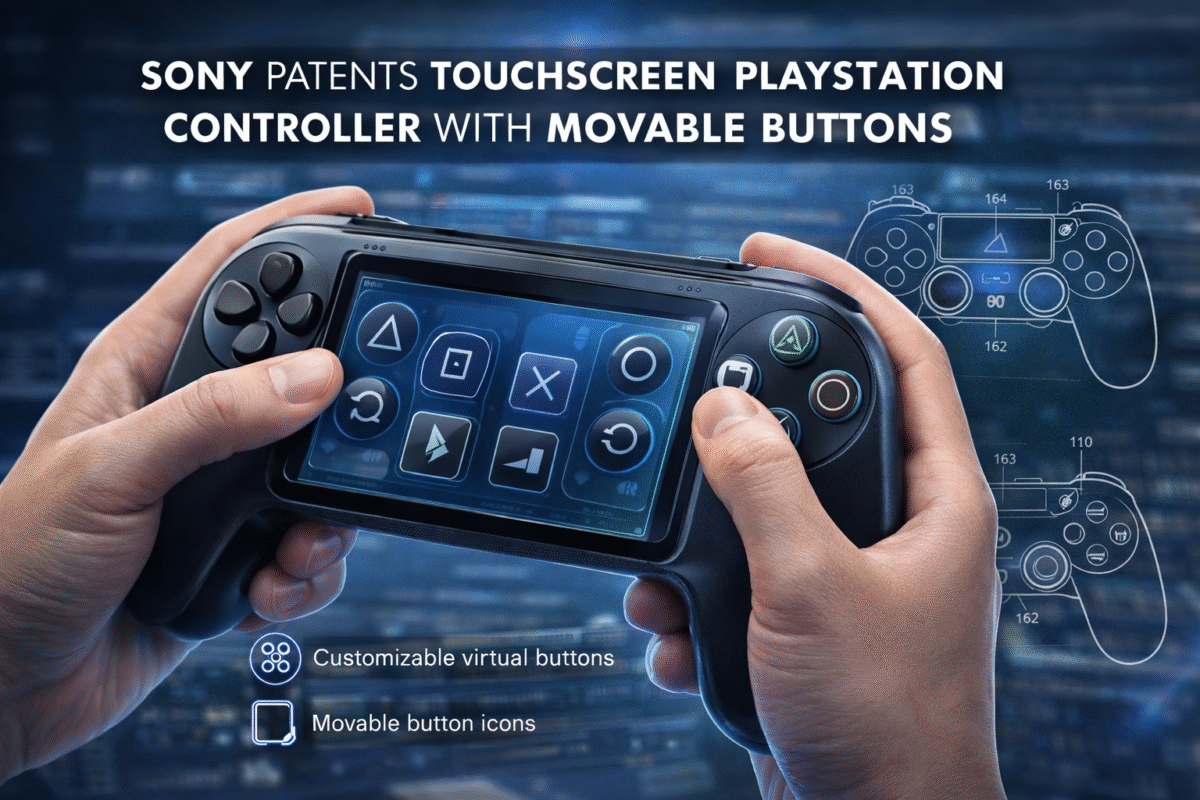
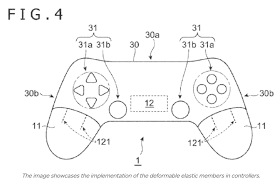
Sony has once again pushed the boundaries of gaming hardware innovation with a fresh round of Sony patents that describe a radically different type of PlayStation controller. This new concept centers on a touchscreen PlayStation controller with movable buttons, suggesting a future where traditional physical inputs could give way to highly customizable digital controls.
While this is still early–stage technology and may never appear in a commercial product, the idea offers a fascinating glimpse into how Sony is thinking about the next generation of gaming interfaces. In this article, we explore what’s in the Sony patent controller design, why it matters, and what it could mean for gamers.
What Is the Sony Touchscreen Controller Patent About?
According to recent filings, Sony’s new controller concept replaces the conventional fixed layout of buttons, thumbsticks, and directional pads with a large touchscreen surface. On that touchscreen, players could place, move, resize, or remove virtual buttons and controls to suit their play style or personal comfort.
Instead of relying on a fixed button layout, the controller would let users:
- Drag and drop virtual buttons anywhere on the screen
- Resize control inputs based on preference
- Save custom layouts per game or player profile
- Remove controls they don’t need
- Reconfigure layouts on the fly
This level of personalization marks a significant departure from standard controllers. It reflects how Sony is exploring new ways to adapt hardware to individual needs rather than forcing every player into a single layout.
Why This Sony Patent Is Interesting
For decades, game controllers have relied on physical buttons and sticks because they provide tactile feedback — the sensation of actually pressing a button. That feedback helps players build muscle memory and react instinctively in fast‑paced games.
The new Sony patent controller concept suggests a future where physical buttons might be replaced by digital inputs, controlled entirely by software and touch. This opens up exciting possibilities:
- Custom layouts: Different button placement for different genres, such as shooters versus racing games
- Accessibility: Players with limited mobility could design more comfortable control schemes
- Adaptive controls: Games could automatically adjust layouts based on context
- Minimalist hardware: A simpler physical frame with fewer mechanical parts
However, the lack of tactile feedback remains a challenge. Touch interfaces don’t provide the same physical sensation players are used to, and that could affect precision in competitive games.
How the Movable Buttons Could Work
The patent describes how sensors in the touchscreen might differentiate intentional taps from accidental touches. These include multi‑touch detection and pressure sensitivity, which could simulate the feel of a real button press even on a flat screen.
Players might begin by selecting a base layout that resembles a traditional controller. From there, they could customize:
- Button positions
- Thumbstick locations
- Trigger zones
- Quick access shortcuts
- Menu buttons
Because the physical surface would be dynamic, players could experiment with layouts that suit their hands, habits, or even disabilities — opening up more inclusive options for gamers who struggle with standard controllers.
What This Means for Accessibility
One of the biggest potential benefits of this concept is improved accessibility. Traditional controllers can be difficult for players with limited dexterity or motor challenges.
A touchscreen interface with customizable buttons could help in several ways:
- Enlarged buttons for easier targeting
- Repositioned controls for ergonomic comfort
- Simplified layouts for casual or new gamers
- Preferences saved across games
In theory, this approach could help make gaming more inclusive without forcing developers to reinvent control schemes. Instead, players would tailor hardware to their requirements.
Sony Patents and Innovation Strategy
Sony has a long history of filing patents that explore speculative hardware designs. Not all patent ideas become products — many are filed to protect intellectual property or to test concepts behind the scenes.
These Sony patents show that the company is actively researching options for evolving controller design. They may not indicate an imminent product launch, but they do signal a willingness to rethink how players interact with games.
This is typical of major technology companies, which often secure patents for technologies that may influence future hardware or software directions.
Challenges and Skepticism
While the concept is compelling, there are clear challenges:
Physical vs. Digital Feedback
Players expect physical cues when gaming — the click of a button or the resistance of a trigger. Replacing these with flat digital surfaces risks losing that connection between player and game.
Accidental Touches
Dynamic touchscreens may struggle to distinguish between intentional and accidental touch, especially in high‑stress gaming situations.
Competitive Play
In games where speed and precision matter most, players might prefer traditional buttons that offer guaranteed feedback and responsiveness.
Developer Support
Games would need to support customizable layouts, requiring coordination between hardware and software teams.
Because of these challenges, any future PlayStation controller based on this patent would likely include hybrid solutions, combining digital and physical elements rather than going fully touchscreen.
Is Sony Patented Auto Play or Difficulty Adjustment?
Some recent patents from Sony reference auto play features and adaptive difficulty systems. These are separate from the touchscreen controller idea, but they point to a broader trend: Sony is exploring how hardware and software can adapt to players.
Adaptive difficulty could tailor game challenges to skill level, making games more accessible to beginners while still challenging veterans. Auto play features could help players through optional sections or tutorials.
Interestingly, having a controller with movable buttons could complement these systems. For example, players could switch to simplified layouts during auto‑play sections and more complex ones for competitive gameplay.
What This Means for Gamers
For now, most of this remains theoretical. A Sony patent controller design doesn’t guarantee that a new PlayStation controller with movable buttons will actually be sold. Patents protect ideas and give companies the freedom to experiment.
But the fact that Sony is actively exploring such a concept suggests that the company is thinking beyond traditional hardware. Whether this leads to a new PlayStation controller or influences future products, it opens up new possibilities for personalization and accessibility in gaming.
Conclusion
Sony’s recent patents describe an ambitious controller concept that swaps fixed physical buttons for a customizable touchscreen interface with movable buttons. While this Sony patent controller design is still far from a confirmed product, it highlights exciting directions in gaming innovation — especially in personalization and accessibility.
By exploring adaptive hardware interfaces and even complementary features like auto play and difficulty adjustments, Sony continues to push the boundaries of interaction between players and games. Whether these ideas become real products or influence future designs, they show how hardware could evolve in the years ahead.
❓ Frequently Asked Questions (FAQs)
Q1. What are Sony patents describing in the new controller?
The patents describe a PlayStation controller with a touchscreen where users could move, resize, or customize button layouts to suit their needs.
Q2. What makes this Sony patent controller concept different?
Unlike traditional controllers with fixed buttons, this concept would let players customize their control layout using a touchscreen surface.
Q3. Does this patent mean a new controller is coming soon?
Not necessarily. A patent protects an idea but doesn’t guarantee a product release. Many patents never become consumer products.
Stay Updated with Techindesigns
RojrzTech keeps you informed on the latest in gaming, movies, and tech news. Be the first to learn about the Super Mario Galaxy movie, exclusive Nintendo Direct updates, and all things Mario.
- Follow our updates to get real-time news on cast announcements, trailers, and release dates.
- Explore insights about video game adaptations, celebrity involvement, and production details.
- Engage with the community and share your excitement with fellow Nintendo fans.
Don’t miss out on the adventure—visit Techindesigns.com now to stay ahead in the world of gaming and entertainment