Lenovo Warns High Memory Prices Are the ‘New Normal’ and May Never Return to Previous Levels
June 29, 2026
The 27-Inch LG UltraGear Gaming Monitor Gets a $300 Price Cut at Amazon — Now Under $700
June 30, 2026
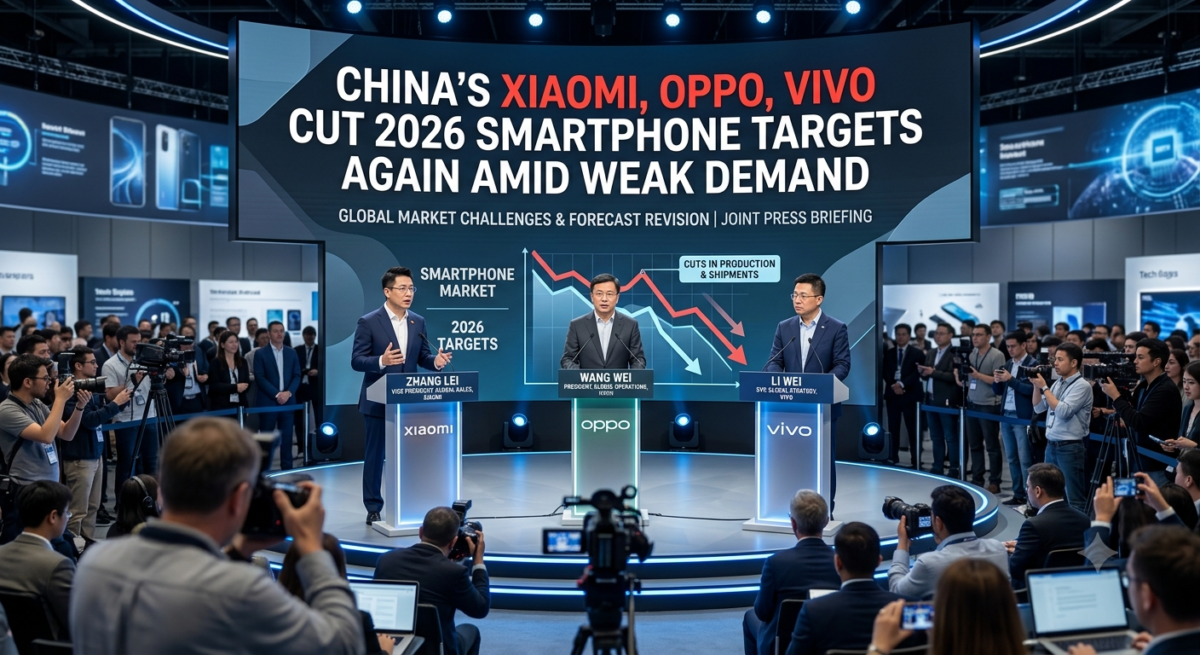
China’s Xiaomi, Oppo, Vivo Cut 2026 Smartphone Targets Again: What It Means for the Industry
China’s leading smartphone manufacturers—Xiaomi, Oppo, and Vivo—have reportedly reduced their 2026 smartphone shipment targets for a second time this year as rising component costs, memory shortages, and weaker consumer demand continue to pressure the global mobile market. The revised forecasts reflect growing caution among manufacturers that had initially expected stronger sales throughout the year.
The latest cuts come at a time when the smartphone industry is facing higher production costs driven by expensive memory chips, increasing competition, and changing consumer buying habits. While premium smartphone sales have remained relatively stable, demand for mid-range and budget devices has softened in several international markets.
Xiaomi, Oppo, and Vivo Lower Shipment Expectations
Industry sources indicate that Xiaomi, Oppo, and Vivo have informed suppliers of another round of shipment target reductions for 2026. Some estimates suggest cuts of up to 30% compared with earlier internal projections, marking the second downward revision this year.
Manufacturers are adjusting production to better match market demand while avoiding excess inventory.
Why Smartphone Targets Are Being Reduced
Several factors are contributing to the lower shipment forecasts.
These include:
- Rising memory chip prices
- Component shortages
- Higher manufacturing costs
- Slower consumer spending
- Weak demand in overseas markets
- Longer smartphone replacement cycles
Together, these challenges have made it difficult for manufacturers to maintain earlier production plans.
Memory Prices Continue to Pressure Manufacturers
One of the biggest challenges facing smartphone makers is the sharp increase in memory prices.
Demand for advanced DRAM and NAND flash chips has surged as artificial intelligence infrastructure expands globally. Memory manufacturers have shifted more production toward AI-related products, reducing supply for consumer electronics.
As a result, smartphone companies are paying significantly more for essential components, squeezing profit margins.
Xiaomi Latest News
The latest Xiaomi news suggests the company has become one of the manufacturers most affected by rising production costs.
Reports indicate Xiaomi has significantly lowered its shipment expectations compared with its original plans for 2026. The company is reportedly focusing on balancing inventory while maintaining profitability instead of pursuing aggressive shipment growth.
Despite the revised targets, Xiaomi remains one of the world’s largest smartphone brands and continues investing in premium smartphones, smart devices, and electric vehicles.
Oppo and Vivo Also Adjust Production Plans
Oppo and Vivo have reportedly adopted similar strategies by reducing shipment expectations and focusing on more profitable product categories.
Industry analysts believe both companies are placing greater emphasis on flagship smartphones while becoming more selective about entry-level and mid-range devices, particularly in overseas markets.
Huawei Regains China Smartphone Lead
While several competitors are reducing shipment targets, Huawei continues to perform strongly in China’s domestic smartphone market.
Industry reports indicate Huawei has regained its leadership position in China, supported by growing consumer confidence, competitive flagship devices, and an increasingly localized supply chain.
Unlike some competitors, Huawei has reportedly been less affected by global memory price increases because of stronger relationships with domestic component suppliers.
Global Smartphone Demand Remains Mixed
Although premium smartphone sales have shown resilience in some regions, overall global demand remains uneven.
Consumers are keeping their devices for longer periods due to:
- Improved smartphone durability
- Longer software support
- Economic uncertainty
- Higher flagship prices
- Fewer breakthrough hardware upgrades
These trends have contributed to slower replacement cycles across many international markets.
Component Shortages Continue
Beyond memory chips, smartphone makers continue managing supply chain challenges involving several key components.
Manufacturers are carefully planning production schedules to reduce the risk of shortages while avoiding excess inventory.
Many suppliers have also adjusted manufacturing capacity in response to fluctuating customer demand.
How AI Is Affecting the Smartphone Market
Artificial intelligence is indirectly reshaping smartphone manufacturing.
As technology companies invest heavily in AI infrastructure, demand for high-performance memory chips has increased dramatically.
This shift has reduced component availability for smartphone manufacturers while increasing production costs across the industry.
Consumers May Notice Higher Smartphone Prices
If component costs remain elevated, consumers could eventually see higher retail prices for new smartphones.
Manufacturers may respond by:
- Raising prices
- Reducing promotional discounts
- Offering fewer storage options
- Delaying certain product launches
- Prioritizing premium models
However, competitive pressure could limit how much companies increase prices.
What This Means for the Smartphone Industry
The latest shipment cuts highlight a shift from aggressive growth toward profitability and operational efficiency.
Rather than producing as many smartphones as possible, manufacturers are focusing on:
- Inventory management
- Cost control
- Premium devices
- Sustainable growth
- Supply chain stability
This strategy may help companies navigate uncertain market conditions while protecting profit margins.
Outlook for 2026
Industry analysts expect smartphone demand to gradually recover if component prices stabilize and consumer spending improves.
Much will depend on:
- Memory chip availability
- Global economic conditions
- Consumer confidence
- AI-related component demand
- New flagship smartphone launches
Manufacturers will likely continue adjusting production plans based on changing market conditions throughout the year.
Conclusion
The latest decision by Xiaomi, Oppo, and Vivo to reduce their 2026 smartphone shipment targets reflects the significant challenges facing the global smartphone industry. Rising memory prices, ongoing component shortages, and softer consumer demand have forced manufacturers to become more cautious about production. At the same time, Huawei’s stronger position in China’s domestic market demonstrates how localized supply chains can provide a competitive advantage during periods of industry disruption. As the market continues evolving, smartphone makers will likely prioritize profitability, premium products, and supply chain resilience over rapid shipment growth.
Frequently Asked Questions (FAQs)
Why did Xiaomi, Oppo, and Vivo cut their 2026 smartphone targets?
The companies reportedly reduced shipment forecasts because of rising memory prices, component shortages, higher production costs, and weaker smartphone demand.
Why are memory prices increasing?
Growing demand for AI-related hardware has increased competition for memory chips, reducing supply for consumer electronics and pushing prices higher.
Is Xiaomi still one of the world’s biggest smartphone brands?
Yes. Despite lowering shipment targets, Xiaomi remains one of the leading global smartphone manufacturers.
How is Huawei performing?
Reports suggest Huawei has regained the leading position in China’s smartphone market and has been less affected by rising memory costs thanks to its domestic supply chain.
Will smartphone prices increase?
If component costs remain high, manufacturers may eventually raise prices or reduce discounts on new devices.
Which smartphones are most affected?
Mid-range and budget smartphones are expected to experience the biggest impact because of tighter profit margins.
Will production recover later in 2026?
Production could improve if memory prices stabilize, supply constraints ease, and consumer demand strengthens.
What is the biggest challenge for smartphone makers today?
The combination of rising component costs, AI-driven memory demand, slower consumer upgrades, and global economic uncertainty remains the industry’s biggest challenge.