67 Emote Frenzy in Clash Royale: What Creators & Designers Can Learn from the Viral Surge
October 27, 2025
One Piece Anime Takes a Hiatus as Netflix’s Live-Action Sets Sail for 2026 — What This Means for Fans and Creators
October 29, 2025
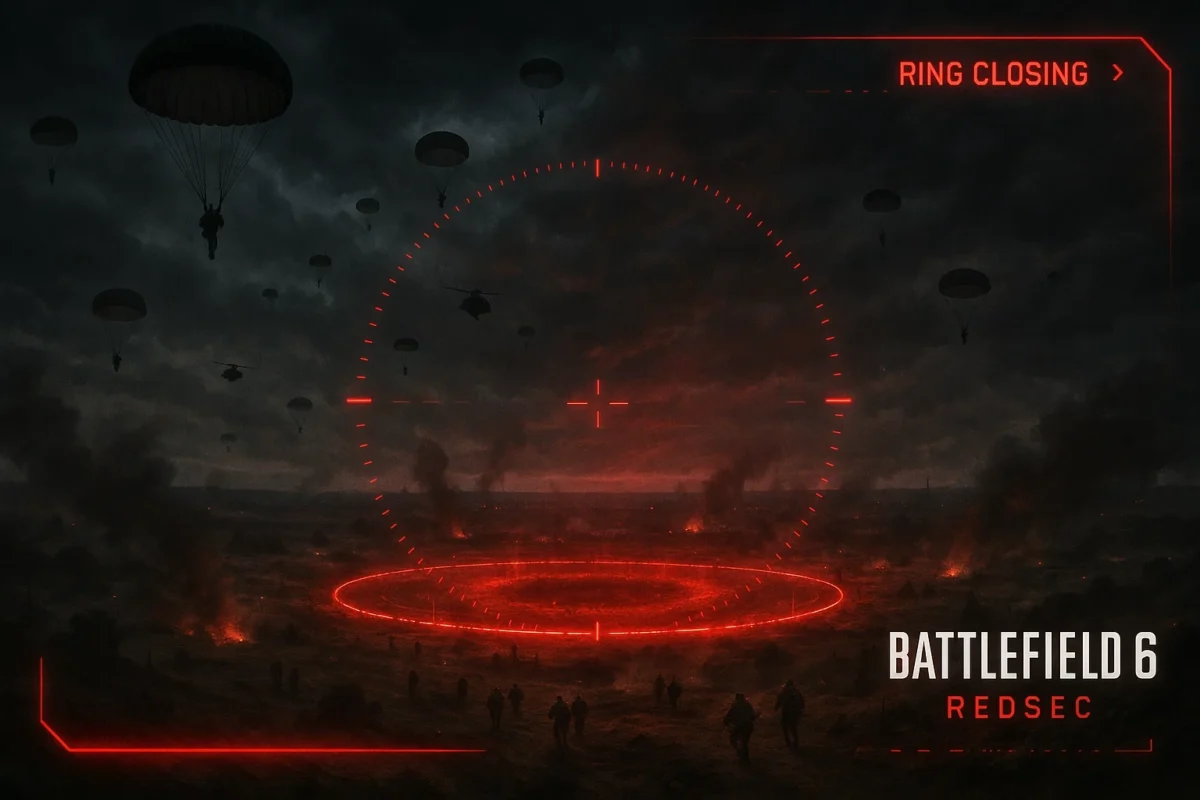
Battlefield 6’s “RedSec” Battle Royale Mode Is Finally Here — A Deep Dive into Its Design, UX & Creative Lessons for 2025
Few announcements have set the gaming world abuzz like this one: Battlefield 6’s long-rumored battle-royale mode, “RedSec,” is finally dropping on October 28, 2025 — and it’s completely free-to-play across PC and console.
According to Tom’s Hardware, this is more than a mode; it’s a strategic design statement by EA DICE, signaling how AAA studios are rethinking accessibility, storytelling and visual consistency for a new era of players.
For game designers, UX specialists, and creative directors, RedSec isn’t just an exciting new title — it’s a case study in experience design.
The Return of the Battlefield Identity
After experimenting with traditional multiplayer and narrative campaigns, Battlefield 6 is re-anchoring its brand around dynamic sandbox warfare. But RedSec introduces something fresh — the unpredictability and social intensity of battle-royale storytelling.
Battle-royales, from PUBG to Fortnite, have mastered player agency: you create the story by surviving it.
In RedSec, DICE aims to merge cinematic realism (Battlefield’s hallmark) with player-driven chaos, promising destruction physics, weather dynamics, and a narrative layer embedded into each match.
Cross-Platform Design as a UX Challenge
Launching a game simultaneously across PC, PlayStation 5, and Xbox means designing for interface parity.
- UI Scaling: Minimalistic yet information-dense HUD that fits both keyboard and controller input.
- Interaction Consistency: The same core actions (ping, revive, deploy) must feel identical regardless of input method.
- Visual Continuity: Lighting, color grading and environmental readability must remain coherent across devices.
This level of cohesion requires not only technical optimization but visual system design — how icons, typography, and contrast adapt seamlessly across performance tiers.
Free-to-Play = Design-Driven Retention
“Free” no longer guarantees success. Games now compete on retention loops — and retention is built through design.
Key retention pillars for RedSec:
- Instant onboarding — minimal friction before first drop.
- Visual clarity — players must read the battlefield in seconds.
- Reward feedback — every elimination, revive, or capture triggers visual + audio dopamine.
- Social storytelling — squads create mini-narratives that feed shareability.
Each is a UX principle disguised as entertainment.
The Aesthetic Architecture of RedSec
Leaks hint that RedSec’s visual tone departs slightly from the desaturated realism of previous Battlefield titles. Expect:
- A scarlet-themed identity inspired by the “redacted sector” motif.
- Layered motion graphics across load screens and killcams.
- Dynamic lighting cues for safe vs danger zones, using cinematic LUTs (look-up tables) to shape mood.
- Minimalist typography echoing classified military documents.
This synthesis of UI motion design and lore storytelling is what makes RedSec stand out.
For visual designers, it’s a prime reference on how to merge brand identity with gameplay language.
System Requirements and Performance Accessibility
Accessibility isn’t just about color filters; it’s also about hardware inclusivity.
As Tom’s Hardware notes, even mid-range GPUs can handle Battlefield 6. For RedSec, this democratizes entry — critical for free-to-play ecosystems.
Designers can learn:
- How to optimize visual fidelity while preserving core aesthetics.
- How to modularize assets for scalable performance.
- Why low-spec accessibility enhances community diversity — and therefore content creation.
Lessons for Game Designers & Visual Storytellers
- Story Through Environment:
RedSec replaces scripted cut-scenes with emergent environmental storytelling. Terrain tells emotion. - Feedback Psychology:
UI vibrations, glow effects, and dynamic color shifts aren’t decoration — they are emotional triggers. - Player Perspective as Camera:
Every POV becomes a storytelling lens. Design must guide players to frame their own cinematic moments. - Dynamic Branding:
The RedSec emblem evolves based on match conditions — an example of adaptive branding in real-time design systems.
Redefining the Creator Ecosystem
DICE confirmed RedSec will feature integrated spectator and replay tools, fueling creators, streamers, and content studios.
For the TechInDesigns audience, that means one thing: new possibilities for visual production workflows — from overlay design to motion-graphic intros.
Expect the rise of:
- Branded esports packages using RedSec color palettes.
- Custom motion templates for match recaps.
- Real-time data visualization (kill-feeds, ring closures, MVP dashboards).
Each element transforms gameplay data into storytelling content.
Competitive Market Context
2025’s battle-royale space is crowded — Fortnite, Apex Legends, Warzone 2, PUBG Evolve.
Yet, RedSec differentiates itself through destruction physics and cinematic immersion — blending art-direction and player agency.
For designers, the takeaway is strategic:
Innovation doesn’t always mean inventing new mechanics — sometimes it means redesigning how players feel familiar ones.
Design Challenges Ahead
- Readability Under Pressure — battlefield chaos must never obscure crucial feedback.
- Emotional Pacing — designers must orchestrate calm → tension → release, much like film structure.
- Monetization vs Immersion — free-to-play skins and passes should complement, not clutter, the design language.
What This Means for the Future of AAA UX
Battlefield’s pivot proves UX is now the core differentiator in AAA game launches.
RedSec embodies what future AAA design looks like: seamless onboarding, adaptive UI, inclusive performance, and emotional coherence.FAQs
Q1. When is Battlefield 6 RedSec releasing?
👉 October 28, 2025, across PC and consoles.Q2. Is RedSec free-to-play?
Yes. RedSec marks Battlefield’s first fully free-to-play experience.Q3. What design features stand out?
Cross-platform UI parity, adaptive lighting, emergent storytelling and minimalist data visualization.Q4. How does this affect creators?
Integrated replay tools, branded templates and visual consistency open new opportunities for content production.Q5. What can game designers learn?
Balancing spectacle with readability, building scalable ecosystems, and turning mechanics into emotional narratives.Design the Future of Play.
At TechInDesigns, we decode how world-class titles translate visual art into interactive experience.
Visit TechInDesigns.com to explore the intersection of game design, UI innovation, and creative technology — where aesthetics meet performance.